

Discovering the Tunnel Cu Chi: A Journey into Vietnam’s Underground History

Table of Contents
- Introduction to the Tunnel Cu Chi
- The Historical Significance of the Tunnel Cu Chi
- Construction and Engineering Wonders
- Life Inside the Tunnel Cu Chi
- Weapons, Traps, and Guerrilla Warfare
- The Tunnel Cu Chi Today: A Living Museum
- Visitor Experience: What to Expect
- How to Get to the Tunnel Cu Chi
- Tips for Visiting the Tunnel Cu Chi
- Final Thoughts: Why the Tunnel Cu Chi is a Must-See
1. Introduction to the Tunnel Cu Chi
Welcome to the world of history, courage, and resilience—welcome to the Tunnel Cu Chi. Nestled just outside Ho Chi Minh City, this incredible network of underground tunnels stands as one of Vietnam’s most iconic landmarks. As your guide, Vietnam Morning is thrilled to take you on a deep dive into what makes the Tunnel Cu Chi such a remarkable destination.
2. The Historical Significance of the Tunnel Cu Chi
The Tunnel Cu Chi isn’t just a tourist attraction; it’s a testament to the grit and ingenuity of the Vietnamese people during the Vietnam War. Used by the Viet Cong as hiding spots, supply routes, hospitals, and living quarters, the tunnel system played a vital role in resisting American forces. It stretched over 250 kilometers and was instrumental in the war effort, helping the North Vietnamese Army remain hidden and agile.
3. Construction and Engineering Wonders
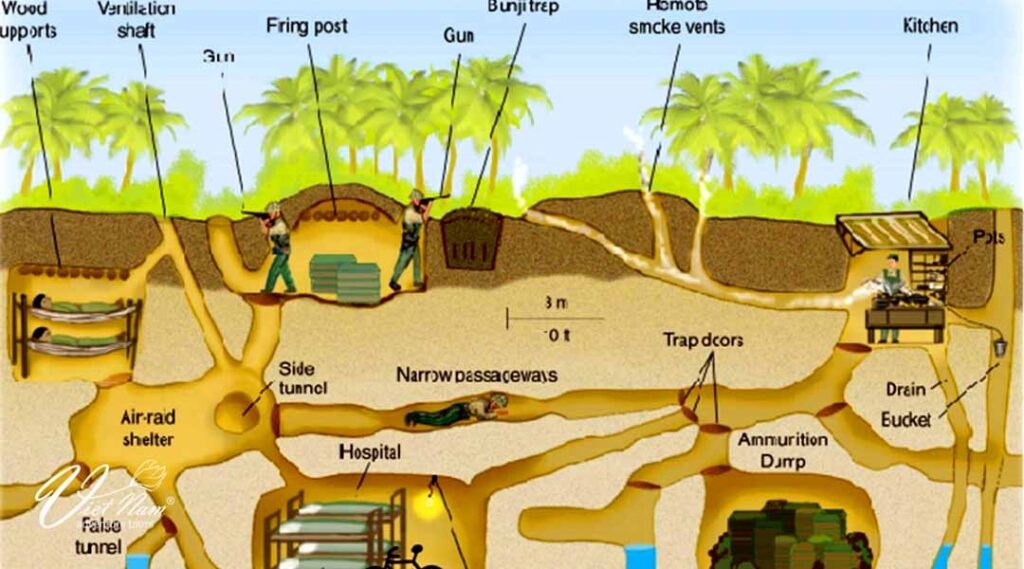
What makes the Tunnel Cu Chi even more fascinating is how it was built. Primarily dug by hand with simple tools, the tunnels vary in size, with some just large enough for a person to crawl through. There were multiple levels, sophisticated ventilation systems, and booby traps to prevent enemy infiltration.
The durability of the Tunnel Cu Chi is nothing short of amazing. Even decades later, portions of the tunnel remain intact, having survived bombings, floods, and time itself. The construction is a marvel of wartime engineering.
4. Life Inside the Tunnel Cu Chi
Imagine living underground for weeks or even months at a time. The Tunnel Cu Chi was more than just a hideout—it was a complete subterranean world. Families lived, cooked, and slept in the tunnels. There were makeshift schools, medical stations, and even command centers.
Life wasn’t easy. Poor air circulation, limited food, and constant danger made it a daily struggle. But the sense of community and shared purpose kept the spirit alive. It’s this resilience that leaves visitors in awe of what life must have been like inside the Tunnel Cu Chi.
5. Weapons, Traps, and Guerrilla Warfare
The Tunnel Cu Chi was a hub of guerrilla warfare. Ingenious traps like the infamous Punji sticks, bamboo spike pits, and swinging spiked doors were designed to injure or eliminate enemy soldiers. These weren’t just weapons; they were psychological tools that instilled fear and confusion.
In addition to traps, the tunnels served as weapons factories. Here, discarded American bombs were turned into explosives. Firearms and ammunition were crafted underground, showcasing the resourcefulness of the Viet Cong.
6. The Tunnel Cu Chi Today: A Living Museum
Fast forward to today, the Tunnel Cu Chi is preserved as a historical site and living museum. Two main sections are open to tourists: Ben Dinh and Ben Duoc. Both offer a fascinating glimpse into the past, complete with restored tunnel sections you can crawl through, exhibits, and war relics.
Walking through the Tunnel Cu Chi, visitors can experience the cramped quarters firsthand. There are life-size mannequins, old uniforms, and even a recreated underground kitchen where food was prepared without giving away the tunnel’s location.
7. Visitor Experience: What to Expect
Your visit to the Tunnel Cu Chi starts with a short film about its history. Then, a local guide leads you through the grounds. Be prepared to duck and crawl—the tunnels are authentic and tight! Along the way, you’ll see demonstrations of how traps worked, touch real artifacts, and even fire weapons at a nearby shooting range (optional).
The Tunnel Cu Chi offers a visceral, immersive experience that brings history to life. It’s not just about looking; it’s about feeling what it was like to be there.
8. How to Get to the Tunnel Cu Chi
The Tunnel Cu Chi is located about 70 km northwest of Ho Chi Minh City. There are several ways to get there:
- By Tour Bus: Most popular and includes a guide.
- By Private Car: More flexible and comfortable.
- By Motorbike: Adventurous and scenic.
Tours often include hotel pickup and last half a day. Vietnam Morning recommends booking with a reputable agency to get the most out of your experience.
9. Tips for Visiting the Tunnel Cu Chi
- Wear comfortable clothes: You’ll be crouching and crawling.
- Bring water: It gets hot and humid.
- Don’t be claustrophobic: The tunnels are narrow.
- Ask questions: Guides are knowledgeable and love to share.
- Respect the site: This is a place of history and memory.
10. Final Thoughts: Why the Tunnel Cu Chi is a Must-See
At Vietnam Morning, we believe that the Tunnel Cu Chi is more than just a stop on your Vietnam itinerary—it’s an experience that changes how you understand history. The courage, determination, and cleverness embodied in this underground world are nothing short of inspiring.
Whether you’re a history buff, an adventurer, or someone curious about Vietnam’s past, the Tunnel Cu Chi offers something unforgettable. It brings history out of textbooks and into reality. So when you’re in Vietnam, don’t just pass through Ho Chi Minh City—go a little further, duck into the darkness, and discover the light of resilience that is the Tunnel Cu Chi.


